This post is about timing. It covers what actually has to happen before the year closes, how Section 179 and bonus depreciation fit together, and how to plan a purchase so the machine is producing in your yard, not sitting on a truck, when the calendar flips.
For the full rundown on limits, financing, and which Sand Science equipment qualifies, see our Section 179 guide for crushing and screening equipment.
Sand Science is an equipment dealer, not a tax advisor. Talk with your CPA before making a purchase decision based on tax treatment.
“Placed in Service” Is the Deadline That Counts
The date on your invoice is not the date the IRS cares about. To claim the deduction on your 2026 return, the equipment has to be placed in service by December 31. That means delivered, set up, and ready to run the work it was bought for.
A signed purchase order does not count. A deposit does not count. A jaw crusher still in transit on December 30 does not count. If you want this year’s deduction, plan backward from the day the machine needs to be ready on site, not the day you sign.
The good news: financed equipment qualifies the same way as equipment paid for in cash, and the loan does not have to be paid off by year end. You can take the deduction on the full purchase price while you pay for the machine over time out of the production it creates.
Section 179 and Bonus Depreciation: How They Work Together
There are two tools for writing off equipment in the year you buy it, and most contractors making a large purchase will touch both.
Section 179 lets you elect to deduct the cost of qualifying equipment up front. For tax years beginning in 2026, the limit is $2,560,000, and it starts to phase out dollar for dollar once total qualifying purchases pass $4,090,000. The deduction also cannot exceed your taxable business income for the year.
Bonus depreciation picks up where Section 179 stops. Equipment acquired after January 19, 2025 is eligible for 100% bonus depreciation, with no dollar cap. Unlike Section 179, it is not limited by business income.
The usual order is Section 179 first, then bonus depreciation on whatever basis remains. Your CPA will decide the right mix for your situation, but the takeaway for planning is simple: for most operations buying one to three machines this year, the full cost can come off this year’s return.
| Section 179 | Bonus Depreciation | |
|---|---|---|
| 2026 limit | $2,560,000 | No dollar cap (100%) |
| Phase-out | Begins at $4,090,000 in purchases | None |
| Limited by business income | Yes | No |
| How it applies | You elect it | Applies automatically unless you opt out |
| Used equipment | Qualifies if new to your business | Qualifies if new to your business |
A Simple Example
Say your business buys a track jaw crusher and a trommel this year, with a combined price of $500,000, and both are delivered and running by mid December.
If your taxable business income for 2026 is above $500,000, Section 179 can cover the full $500,000 this year. If your income is lower, say $300,000, Section 179 is capped at $300,000. The remaining $200,000 can carry forward under Section 179, or your CPA may apply bonus depreciation to it instead.
Either way, the comparison is the same: deduct the cost now, or spread it across years of depreciation while the machine earns money for you today.
Figures are hypothetical and for illustration only.
A Six Week Plan for Buying Before Year End
Mid November leaves enough time to do this right, but not enough to wait. Here is how to work backward from December 31.
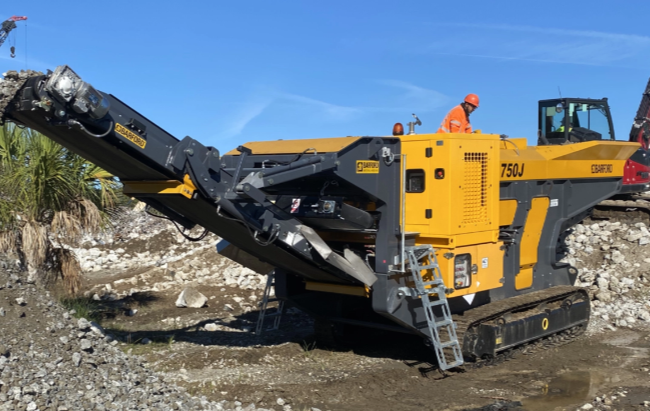
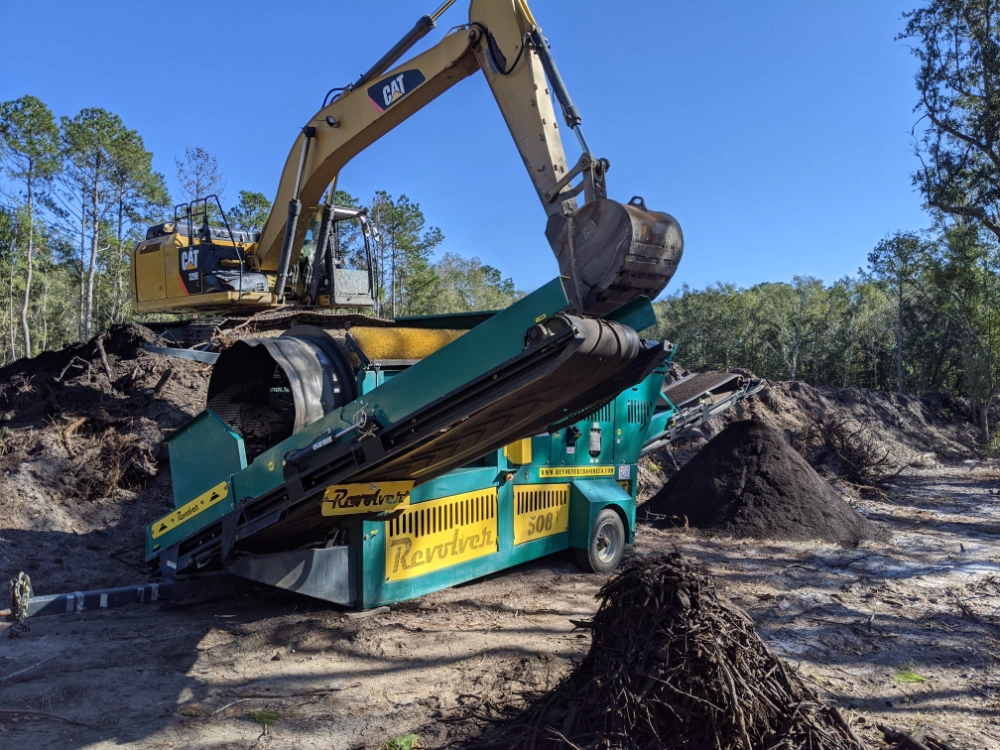
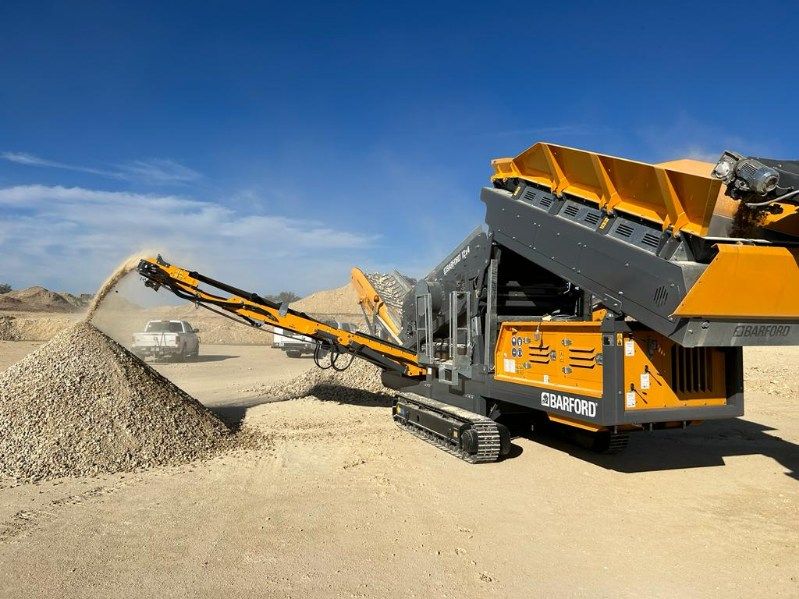
Now through Thanksgiving: Pick the machine. Decide what the purchase has to solve. Hauling concrete off site points to a jaw crusher like the Barford 750J or 1060J. Screening topsoil, compost, or mulch points to a trommel like the Roto-Screen 454, Barford T620, or Revolver RT508. Scalping C&D or rock points to the Barford SR124 or SR165. Call us with your material and tons per day and we will narrow it down.
Late November: Get financing moving. If you are financing, start the application now. Approval, documents, and funding take time, and they sit between you and delivery.
Early December: Confirm availability and schedule delivery. Lock in a delivery date with room to spare. Weather, trucking, and holiday schedules all get tighter in the second half of December.
Mid December: Delivery, setup, first run. Get the machine on site, set up, and run material through it. Document the date it went to work.
Before December 31: Pull your paperwork together. Keep the invoice, financing documents, and proof of the delivery date. Your accountant will need them to claim the deduction on IRS Form 4562.
Used Equipment Counts Too
A new machine is not the only path. Used equipment qualifies for Section 179 as long as it is new to your business, bought from an unrelated party, and used mainly for business. For a contractor who needs a second screen or a backup crusher, a used unit can deliver the same year-end deduction at a lower entry price.
Rentals are different. Rental payments are generally treated as an ordinary business expense, not a Section 179 purchase. If you rent now and know you will keep needing the machine, ask us about rental options that move you toward ownership.
Mistakes That Cost Contractors the Deduction
Waiting for the last week of December. Holiday trucking and weather delays are the most common reason a machine misses the cutoff.
Confusing the order date with the service date. Paying in December for a machine delivered in January moves the deduction to next year.
Buying to chase the deduction. A write-off reduces the cost of a machine you need. It does not make the wrong machine a good buy. Size the equipment to your material and production first.
Skipping the CPA conversation. State tax treatment, income limits, and how 179 and bonus depreciation are split all depend on your situation. A short call before you buy is worth it.
Frequently Asked Questions
Do I have to pay off financed equipment by December 31 to take the deduction?
No. Financed equipment can qualify for the full deduction in the year it is placed in service, even if most of the loan is still ahead of you.
What if the equipment arrives January 2?
Then it is placed in service in 2027, and the deduction belongs on next year’s return. Build in a cushion when you schedule delivery.
Does used equipment qualify for Section 179?
Yes, as long as it is new to your business, bought from an unrelated party, and used mainly for business purposes.
Can I take Section 179 on rented equipment?
No. Rental payments are generally deducted as an ordinary business expense instead.
What is the difference between Section 179 and bonus depreciation?
Section 179 is an election with a dollar limit and a business income limit. Bonus depreciation has no dollar cap and is not limited by income. Many businesses use Section 179 first, then bonus depreciation on the rest.
Which Sand Science equipment qualifies?
Crushers, trommel screens, scalping screens, washing plants, conveyors, stackers, and feeders bought for business use generally qualify. Confirm the specifics with your tax professional.