CONCRETE CRUSHING · RECYCLING · SALES · RENTALS
Concrete Crushing Equipment for On-Site Recycling
Crushing concrete on site turns demolition debris into base you can reuse or sell. Sand Science Inc. sells and rents the jaw crushers and picking stations that do it.
Turn Demolition Concrete Into Reusable Base
Broken concrete leaving a site is paid for twice, once in trucking and tipping fees to get rid of it, and again in new stone hauled back in. Crushing it where it sits collapses both costs into one machine and leaves you with base material you can place on the job or sell off the yard. Sand Science Inc. supplies the portable concrete crushers, picking stations, and handling equipment that contractors and C and D recyclers across the Southeast use to run that loop on their own sites.
Track Jaw Crushers Sized for Concrete
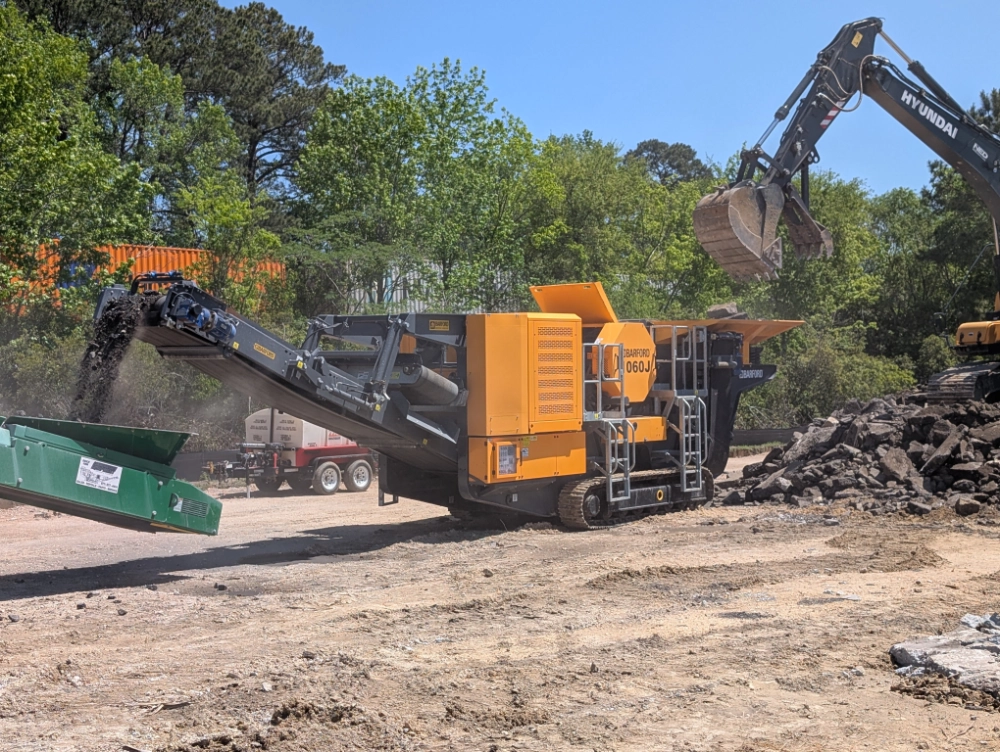
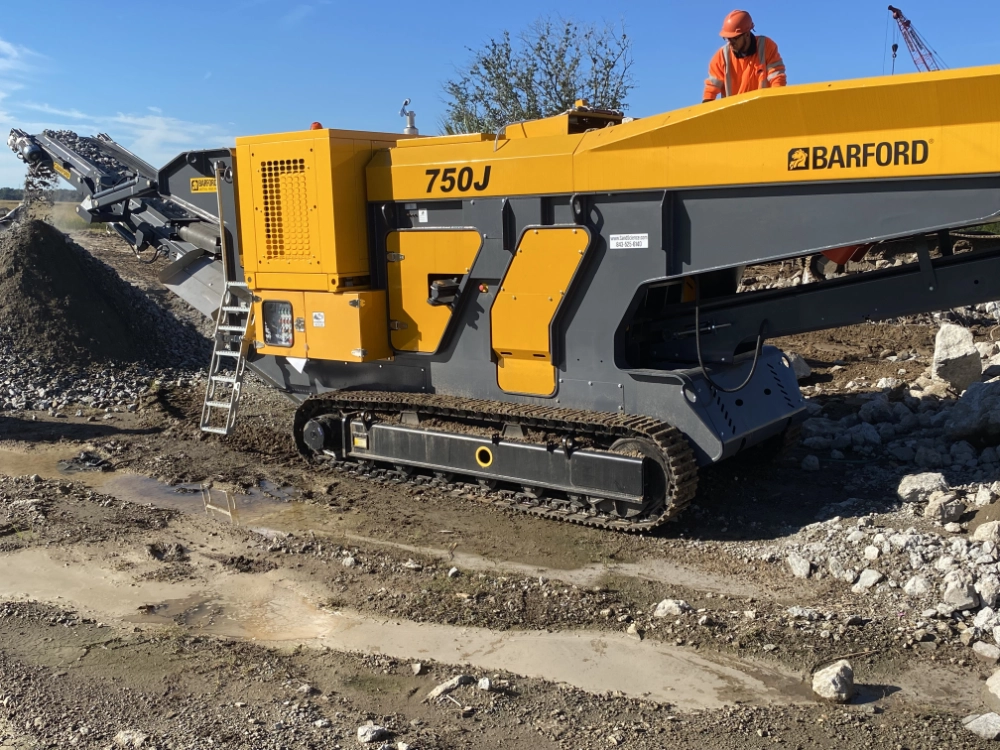
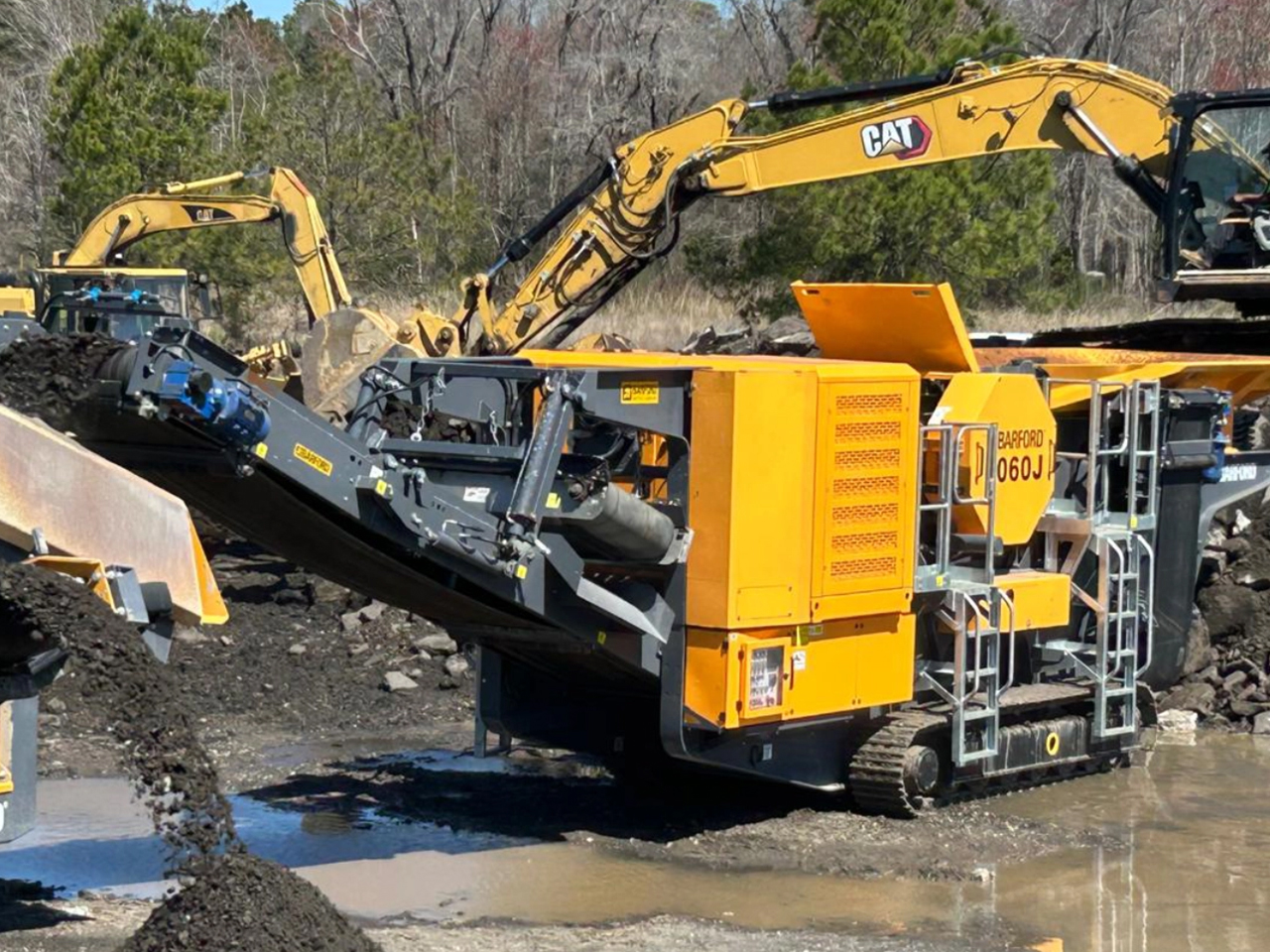
A track jaw crusher is what takes slab, footing, and foundation rubble down to a usable size. The Barford 750J runs a 28 inch by 20 inch jaw opening and moves easily between jobs, which suits contractors crushing on one site and then the next. The Barford 1060J opens up to 40 inches by 24 inches for yards taking in steady demolition volume. Both run a dual power CAT diesel electric system, so you are not paying full diesel burn to make base.
Picking Stations for Cleaner C and D Material
Demolition concrete rarely arrives clean. Rebar, wood, wire, plastic, and general jobsite trash come in with it, and every piece that stays in the stream either lowers the value of your finished base or finds its way into a machine that was not built to eat it. Kafka picking stations give your crew a working platform to pull contamination out before or after the crusher, in mobile or fixed formats. Cleaner feed means a cleaner product, higher recovery, and less material you end up paying to dispose of anyway.

Feeding and Sizing Your Crushed Base
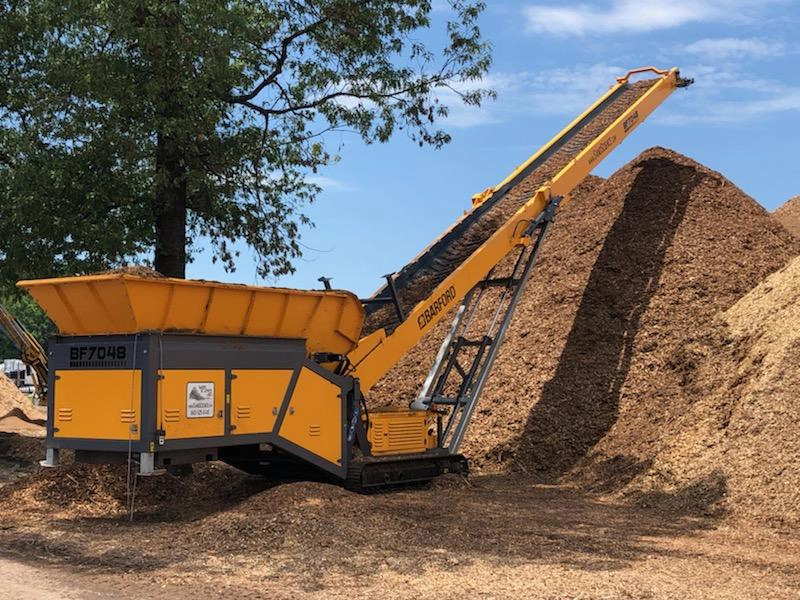
Crushing is one step of a loop that has to keep moving. The Barford BF7048 hopper feeder holds 13 cubic yards and uses a hydraulic auger to stop bridging, so the crusher stays fed at a steady rate instead of surging every time the excavator drops a bucket. On the discharge side, a Barford SR124 or SR165 screens crushed concrete into sized products rather than one undifferentiated pile, and Barford track stackers build those products into clean, separate stockpiles ready to load out.
Support Built Around What Concrete Does to Machines
Concrete is hard on crushers in specific ways. Rebar wraps, uncrushables find the chamber, jaw dies wear, and a closed side setting that drifted last month is why your base is suddenly out of spec. Sand Science Inc. backs every crusher we sell and rent with service from people who have seen all of it. We are available around the clock, and we help you set the machine up for the material you are actually feeding it.

Maintenance and Repair: Jaw die inspection, closed side setting checks, and repairs that get a crusher back on the pile fast.
Technical Support: Setup guidance for concrete feed, output sizing to your base spec, and troubleshooting when something in the stream does not belong.
Parts Replacement: Wear parts for high abrasion concrete duty kept moving, so a worn die does not stall your recycling line.
Crush On Site and Cut Disposal Costs
Every load of concrete you do not truck off is a tipping fee you do not pay and a haul you do not book. Processing in place also means the base you need for backfill and subgrade is already on the job instead of arriving by the truckload.
Rentals for Demolition and Project Work
Renting puts a portable concrete crusher on a teardown, a single contract, or a seasonal push without committing capital. We help you size the machine to the rubble you are facing and coordinate delivery and pickup around the demolition schedule.

Sales and Financing for Steady Recyclers
If concrete comes through your yard every week, owning the crusher brings your cost per ton down and lets you set up the machine for your own product spec. Financing structures the purchase so you can pay for it out of what it produces.
Make Your Concrete Pay for Itself
The right machine is the difference between a job that flows and one that stalls. Sand Science Inc. helps operations across Jacksonville and the First Coast find equipment for construction, recycling, and material handling, including on-site crushing and screening that cuts transport costs and lets you reuse material. Tell us what your project needs and our team will help you find the right fit.
Concrete Crushing Equipment FAQs
What can I do with crushed concrete?
Most operations use it as road base, subgrade, backfill, or fill under slabs and parking areas. Screened to a consistent size, it is a product you can sell rather than material you pay to get rid of.
What happens to rebar in the crushing process?
Rebar is separated out as part of the recycling stream, and a Kafka picking station gives your crew a platform to pull it and other contamination before it reaches the crusher or reduces the value of your finished product.
Which crusher should I use for concrete?
The Barford 750J suits contractors moving between jobs with a 28 inch by 20 inch jaw opening. The Barford 1060J, at 40 inches by 24 inches, fits yards taking in steady demolition volume. The right pick depends on your feed size and your tonnage.
Can I crush concrete right on the demolition site?
Yes. Track crushers move onto the site and process the rubble where it falls, which is the whole point. It removes the haul out, the tipping fee, and the haul back in for new base.
Do I need to screen crushed concrete?
If you are selling it or placing it to a spec, yes. Running crusher output across a scalping screen separates it into sized products instead of one mixed pile, which is usually the difference between salable base and general fill.
Should I rent or buy a concrete crusher?
Rent for a single teardown or a short run of project work. Buy if concrete is a steady part of your business, since ownership lowers cost per ton over time. Both paths are open, and financing is available on purchases.
Questions on these machines?